
Overview
The 154–156 MHz VHF Outdoor Omnidirectional Antenna is designed for reliable two-way radio and base station communications in outdoor environments. Featuring 6 dBi gain, 360° horizontal signal coverage, and low VSWR of 1.5 or less, it helps improve communication performance across large outdoor areas. Its durable fiberglass construction, 100 W power handling, and weather-resistant design make it ideal for VHF land mobile radio (LMR) systems, industrial communications, public safety radio networks, and professional outdoor base stations operating within the supported frequency range.
Frequently Asked Questions About the 154–156 MHz VHF Outdoor Omnidirectional AntennaWhat is a 154–156 MHz VHF outdoor omnidirectional antenna?A 154–156 MHz VHF outdoor omnidirectional antenna is a professional radio communication antenna designed for fixed outdoor installations operating within the 154–156 MHz frequency range. This antenna features 6 dBi gain, 360-degree horizontal coverage, vertical polarization, and durable fiberglass construction. It is suitable for compatible VHF two-way radio base stations, land mobile radio systems, industrial communication networks, and professional radio infrastructure requiring reliable outdoor signal transmission and reception.
What frequency range does this VHF antenna support?This VHF outdoor omnidirectional antenna supports a frequency range of 154–156 MHz, providing a dedicated 2 MHz operating bandwidth. The narrowband frequency design is suitable for professional VHF communication systems operating within this specific range. Customers should verify their exact transmitting and receiving frequencies before purchasing the antenna.
What is the gain of this VHF antenna?The antenna provides 6 dBi gain, which helps concentrate radio frequency energy toward the antenna's primary radiation directions. This gain can improve communication link performance compared with suitable lower-gain antennas under similar installation conditions. The 6 dBi VHF antenna is particularly useful for outdoor base stations and communication networks requiring broad horizontal signal coverage.
What are the main applications of this VHF outdoor omnidirectional antenna?The antenna is designed for professional VHF two-way radio communication, land mobile radio systems, fixed outdoor base stations, industrial radio networks, transportation communications, utility operations, rural communication systems, and compatible public safety radio infrastructure. It may also be used in specialized VHF telemetry and remote monitoring installations operating within 154–156 MHz.
Is this antenna suitable for VHF two-way radio communication?Yes. This antenna is suitable for VHF two-way radio communication systems operating within 154–156 MHz. Its 6 dBi gain, vertical polarization, 50 Ohm impedance, and 360-degree horizontal coverage support communication between fixed radio stations and compatible mobile or portable radios.
Can this antenna be used for VHF base stations?Yes. The antenna is designed for fixed outdoor VHF communication installations and can be used with compatible VHF base station equipment. Its fiberglass radome, 100 W maximum input power, low VSWR, and omnidirectional radiation pattern make it suitable for professional base station applications requiring broad horizontal coverage.
Is this antenna compatible with Land Mobile Radio (LMR) systems?Yes. The antenna can support Land Mobile Radio systems operating within 154–156 MHz. Its vertical polarization and 50 Ohm impedance are compatible with common professional LMR system configurations. It is suitable for fixed radio infrastructure serving mobile radios, handheld radios, and dispatch operations where the operating frequencies match the antenna specifications.
Can this antenna be used for public safety communications?Yes, provided the public safety radio system operates within 154–156 MHz and the antenna meets the communication network's technical requirements. Potential applications include compatible police, fire, emergency response, and municipal radio systems. Frequency allocations and licensing requirements vary by region, so compatibility must be confirmed before installation.
Does this antenna support the entire 136–174 MHz VHF frequency band?No. The standard antenna is specified for 154–156 MHz only. It is not rated for continuous operation across the entire 136–174 MHz VHF frequency range. Customers requiring wider VHF frequency coverage should select a suitable broadband antenna or request an engineering evaluation for a customized design.
Can this antenna operate outside the 154–156 MHz frequency range?Operation outside 154–156 MHz is not covered by the specified electrical performance. The antenna may exhibit increased VSWR, reduced gain, or altered radiation characteristics outside its rated range. Customers should not assume that the antenna provides acceptable performance at other VHF frequencies without additional measurement and verification.
What is the difference between a narrowband and wideband VHF antenna?A narrowband VHF antenna is designed for a relatively small frequency range, while a wideband VHF antenna supports a larger frequency span. This antenna is optimized for 154–156 MHz, making it suitable for systems operating within that specific band. A wideband antenna offers greater frequency flexibility, while a narrowband design may be preferable when dedicated frequency coverage and defined impedance matching are required.
What is the maximum communication range of this antenna?The maximum communication range cannot be determined from antenna gain alone. This antenna provides 6 dBi gain, but actual range depends on installation height, terrain, transmitter power, receiver sensitivity, coaxial cable losses, interference, and surrounding obstacles. Properly designed VHF base station systems may achieve communication over substantial distances, but no specific maximum range is guaranteed by the antenna specifications.
How does the 6 dBi gain improve VHF radio coverage?The 6 dBi gain helps concentrate radio frequency energy within the antenna's primary radiation pattern. Compared with a suitable lower-gain antenna, this can increase the effective signal level in the main coverage directions. The benefit is especially relevant for fixed VHF base stations serving surrounding outdoor areas.
Does this antenna provide 360-degree signal coverage?Yes. The antenna has a 360-degree horizontal radiation pattern, allowing communication in all horizontal directions around the installation site. This omnidirectional coverage is useful for professional VHF radio networks serving users distributed around a central base station.
What is the horizontal beamwidth of this antenna?The specified horizontal half-power beamwidth is 360 degrees. This means the antenna is designed to provide omnidirectional horizontal coverage without requiring precise directional alignment toward a specific communication location.
What is the vertical beamwidth of this antenna?The antenna features a 25-degree vertical half-power beamwidth. This relatively focused vertical radiation pattern helps concentrate radiated energy within a defined elevation range. The suitability of this beamwidth depends on installation height, terrain, and the intended service area.
Is this antenna vertically or horizontally polarized?This antenna uses vertical polarization. Vertical polarization is commonly employed in professional VHF land mobile radio systems and two-way radio communication networks. It is suitable for communication with corresponding vertically polarized antennas.
Why is vertical polarization important for VHF radio communication?Matching antenna polarization helps minimize polarization mismatch losses between transmitting and receiving systems. Because many professional VHF mobile and handheld radio systems use vertical polarization, a vertically polarized base station antenna supports efficient communication with compatible equipment.
What is the VSWR of this antenna?The antenna has a specified VSWR of 1.5 or less within its 154–156 MHz operating frequency range. This indicates good impedance matching and helps reduce reflected RF power during transmission.
Why is low VSWR important for radio communication?Low VSWR helps transfer radio frequency power efficiently from the transmitter to the antenna. Excessively high VSWR increases reflected power and can reduce transmission efficiency. The specified VSWR of 1.5 or less is a valuable performance characteristic for professional VHF radio communication systems.
What is the input impedance of this antenna?The antenna has a nominal input impedance of 50 Ohms. This is the standard impedance used by many professional radio transmitters, receivers, base stations, and RF coaxial cable systems.
Is this antenna compatible with standard 50 Ohm radio equipment?Yes. The antenna is designed with a 50 Ohm input impedance and can connect to compatible professional VHF radio equipment through an appropriate coaxial cable assembly. Frequency range, power rating, connector compatibility, and installation requirements must also be verified.
What is the maximum input power of this antenna?The maximum rated input power is 100 W. The connected transmitter must operate within this limit and the specified 154–156 MHz frequency range.
Can this antenna be used with a 100 W VHF transmitter?Yes. The antenna has a maximum input power rating of 100 W and may be used with compatible 100 W VHF equipment operating within 154–156 MHz. Proper impedance matching, transmission line selection, and installation are necessary.
What type of RF connector does this antenna use?The antenna uses an N Female RF connector. This standard connector is widely used in professional outdoor radio communication installations and supports connection to a compatible N Male coaxial cable connector.
Can this antenna connect to standard coaxial cables?Yes. The antenna can connect to suitable 50 Ohm coaxial cables fitted with a compatible N Male connector. Common professional RF cable types may be considered, but cable attenuation, length, power handling, and outdoor environmental suitability should be evaluated.
Which coaxial cable is recommended for this VHF antenna?A low-loss 50 Ohm coaxial cable is recommended for professional VHF antenna installations. Suitable cable families may include LMR-240, LMR-400, or equivalent professional RF coaxial cables, depending on transmission distance and installation requirements. Longer cable runs generally benefit from lower-loss cables.
Does coaxial cable length affect antenna performance?Yes. Coaxial cable introduces attenuation between the radio and antenna. Longer cable runs generally produce greater signal loss, reducing the power delivered to the antenna and the received signal available at the radio. Selecting an appropriately sized low-loss coaxial cable helps preserve overall VHF communication system performance.
Is this antenna suitable for permanent outdoor installation?Yes. The antenna features a fiberglass radome, an operating temperature range of -40°C to +65°C, and a rated wind velocity of 210 km/h. These specifications make it suitable for consideration in permanent outdoor communication installations with proper mounting, weatherproofing, and electrical protection.
What material is the antenna radome made from?The antenna radome is made from fiberglass. The fiberglass enclosure protects the internal antenna structure and provides a durable exterior suitable for outdoor communication infrastructure.
Is the fiberglass antenna resistant to harsh weather conditions?The antenna is designed for outdoor use and has specified temperature and wind ratings. Its fiberglass radome provides a protective enclosure for the antenna structure. However, specific waterproof ratings, corrosion resistance certifications, UV aging performance, and salt spray test results are not stated in the standard specifications.
What is the operating temperature range of this antenna?The antenna is specified for an operating temperature range of -40°C to +65°C. This allows consideration for outdoor VHF communication installations exposed to a broad range of seasonal temperatures.
Can this antenna withstand strong winds?The antenna has a specified rated wind velocity of 210 km/h. Proper installation is essential because the mounting pole, brackets, supporting structure, and local wind loading conditions also determine the overall mechanical safety of the installation.
What is the maximum rated wind velocity of this antenna?The rated wind velocity is 210 km/h. This value provides an important reference for planning outdoor base station installations, particularly in elevated or exposed locations.
Does this antenna feature lightning protection?The antenna features a DC-grounded design described as lightning protection in its electrical specifications. This design supports grounding considerations but does not provide complete protection against direct lightning strikes or electrical surges.
What does DC-grounded lightning protection mean?DC grounding means the antenna has a conductive path to ground at direct current, depending on its internal electrical configuration. This feature can support static charge drainage and grounding strategies in outdoor RF installations. It should not be considered a substitute for a complete lightning protection system.
Does this antenna require additional lightning surge protection?Yes. Outdoor installations should incorporate suitable grounding, bonding, and RF lightning surge protection according to local electrical and communication standards. A DC-grounded antenna alone does not guarantee protection against lightning-related damage.
What are the dimensions of this VHF antenna?The antenna has a specified body diameter of 25 mm and an overall length of 2500 mm. Its slim fiberglass construction is designed for fixed vertical installation on suitable poles and communication masts.
How much does this outdoor VHF antenna weigh?The specified antenna weight is 2.0 kg. This weight should be considered when planning packaging, transportation, mounting hardware, and supporting structures.
What is the overall length of this antenna?The antenna has an overall specified length of 2500 mm, equivalent to 2.5 meters. This full-size outdoor configuration is suitable for professional fixed VHF radio communication installations.
What mounting pole diameter does this antenna support?The antenna is specified for mounting poles with diameters of 35–55 mm. Installers should select appropriate mounting hardware and verify that the supporting structure can withstand the expected mechanical and environmental loads.
Can this antenna be installed on rooftops?Yes. The antenna can be installed on suitable rooftops using properly engineered mounting poles and hardware. Rooftop installation may improve communication coverage by increasing antenna height and reducing nearby obstructions.
Can this antenna be installed on communication towers?Yes. The antenna is suitable for consideration in communication tower installations. Proper mounting, structural evaluation, grounding, lightning protection, and RF safety procedures are necessary.
Can this antenna be mounted on outdoor poles or masts?Yes. The antenna is designed for fixed outdoor installations using compatible mounting poles or masts. The specified pole diameter range is 35–55 mm.
What is the recommended installation height for this antenna?No universal installation height is specified. The appropriate height depends on terrain, surrounding obstacles, intended coverage distance, tower structure, and communication system requirements. Higher installations can improve VHF line-of-sight conditions, but detailed site evaluation is recommended.
Does the installation height affect VHF communication range?Yes. Installation height is an important factor in VHF communication performance. A properly elevated antenna can improve the radio horizon and reduce obstruction losses. However, increasing height does not guarantee improved coverage in every situation because antenna radiation patterns and local terrain must also be considered.
Can this antenna improve weak VHF radio signals?The antenna's 6 dBi gain can improve signal strength in its primary radiation directions compared with suitable lower-gain alternatives. Effective improvement depends on installation height, cable losses, receiver characteristics, and interference conditions.
Can this antenna reduce communication dead zones?The 360-degree horizontal pattern can help provide broad coverage around a central communication site. However, dead zones caused by terrain, buildings, destructive interference, or insufficient signal strength may remain. Detailed coverage planning is necessary for reliable radio network design.
Can this antenna improve communication in rural areas?Yes. The antenna is suitable for consideration in rural VHF communication systems operating within 154–156 MHz. Its 6 dBi gain and omnidirectional coverage can support communication between fixed base stations and compatible field radios, depending on installation conditions.
Is this antenna suitable for industrial radio communication systems?Yes. The antenna can support industrial VHF communication networks operating within its specified frequency range. Potential installations include factories, industrial facilities, logistics centers, processing plants, and other sites requiring professional two-way radio communication.
Can this antenna be used in factories and manufacturing facilities?Yes. The antenna may be installed as part of a compatible VHF radio system serving factory operations, maintenance personnel, security teams, and production facilities. Outdoor mounting may help provide communication coverage across large industrial properties.
Is this antenna suitable for transportation and logistics communication systems?Yes. Transportation and logistics companies using compatible VHF frequencies may employ the antenna at fixed radio communication sites. Applications can include dispatch operations, vehicle communication, and coordination of personnel across outdoor facilities.
Can this antenna be used for utility and energy communication networks?Yes. Utility companies and energy infrastructure operators may use this antenna in compatible VHF radio networks. Potential applications include maintenance coordination, field communication, and fixed operational radio systems.
Is this antenna suitable for agricultural and rural radio networks?Yes. Agricultural operations and rural communication providers may use the antenna for licensed VHF radio networks operating within 154–156 MHz. Its omnidirectional coverage is useful for centrally located communication sites serving surrounding agricultural areas.
Can this antenna be used in construction and mining operations?Yes. Construction and surface mining operations using compatible VHF radio equipment may incorporate this antenna into fixed communication infrastructure. Its outdoor fiberglass construction and omnidirectional pattern support applications requiring communication around a central operating location.
Is this antenna suitable for emergency response communication systems?Yes, when operating frequencies and technical requirements are compatible. The antenna can be considered for fixed VHF communication systems supporting emergency response coordination, disaster management, and field operations. It does not independently establish compliance with public safety communication standards.
Can this antenna be used for municipal and government radio networks?Yes. Municipal agencies and government communication contractors operating authorized VHF frequencies within 154–156 MHz may use the antenna in suitable fixed radio communication systems.
Is this antenna suitable for remote monitoring and telemetry systems?The antenna may be used with compatible VHF telemetry equipment operating within 154–156 MHz. Potential applications include industrial monitoring, remote equipment reporting, and specialized radio data transmission systems. Compatibility depends on the telemetry equipment's operating frequency, polarization, power, and RF interface.
Can this antenna support communication between mobile radios and fixed base stations?Yes. The antenna's vertical polarization, 6 dBi gain, and 360-degree horizontal radiation pattern make it suitable for fixed VHF base stations communicating with compatible mobile radios operating within 154–156 MHz.
Can this antenna be used with VHF radio repeaters?Yes. The antenna can be considered for compatible VHF repeater systems operating within its specified frequency range. Repeater installations require additional evaluation of transmitter and receiver frequencies, duplexer characteristics, filtering, isolation, and system power levels.
Is this antenna compatible with handheld VHF two-way radios?The antenna can communicate with compatible handheld VHF radios when both systems operate on suitable authorized frequencies and use compatible polarization. It is primarily designed as a fixed outdoor antenna rather than a directly mounted handheld radio antenna.
Can this antenna be used for marine VHF radio communications?Marine VHF radio systems commonly operate on frequencies outside this antenna's specified 154–156 MHz operating range. Therefore, the standard antenna should not be considered a general-purpose marine VHF antenna. A dedicated marine antenna covering the required marine radio channels is recommended.
Can this antenna be used for amateur radio applications?The standard antenna is specified for 154–156 MHz and is not designed for general amateur VHF operation. The commonly used 2-meter amateur radio band is outside its stated frequency range. Amateur radio users should select an antenna specifically designed for their authorized operating frequencies.
Does this antenna support both transmitting and receiving signals?Yes. As a passive RF antenna, it can be used for both transmission and reception within its specified frequency range. The connected radio system determines whether transmission, reception, or both functions are supported.
How does an omnidirectional antenna differ from a directional Yagi antenna?An omnidirectional antenna provides coverage around the horizontal plane, while a directional Yagi antenna concentrates its radiation toward a particular direction. This 6 dBi outdoor omnidirectional antenna is suitable for central communication sites serving users in multiple directions. A directional Yagi antenna may be preferable for specific point-to-point or directional communication links.
What are the advantages of a fiberglass VHF antenna?A fiberglass radome provides a protective outer enclosure for the internal antenna structure. Fiberglass antenna designs are commonly used in outdoor radio infrastructure because they can provide a practical combination of mechanical protection, corrosion-resistant exterior material, and professional installation appearance. Actual durability depends on material formulation and manufacturing quality.
How does this antenna compare with lower-gain VHF antennas?This antenna provides 6 dBi gain, which can deliver stronger radiation in its main coverage directions than suitable lower-gain alternatives. However, higher gain generally produces a more concentrated radiation pattern, so antenna selection should consider both gain and intended coverage geometry.
How does this antenna compare with wideband VHF antennas?This antenna is specifically designed for 154–156 MHz, while wideband VHF antennas support larger frequency ranges. Its focused operating range and specified low VSWR make it a suitable option for dedicated narrowband applications. Direct performance superiority over a particular wideband antenna would require comparative RF measurements.
What makes this antenna different from other outdoor VHF antennas?The antenna combines dedicated 154–156 MHz operation, 6 dBi gain, 360-degree horizontal coverage, 25-degree vertical beamwidth, VSWR of 1.5 or less, 100 W power handling, and durable fiberglass construction. It also features a 210 km/h wind rating, DC-grounded design, and N Female connector. These characteristics make it a specialized solution for professional fixed outdoor VHF communication installations.
Is this antenna suitable for long-distance VHF communication?The 6 dBi gain can support longer communication links compared with suitable lower-gain antennas under favorable conditions. However, actual communication range depends on the radio system, antenna installation height, terrain, cable attenuation, receiver sensitivity, and environmental conditions. No fixed maximum communication distance is specified.
What factors affect the communication range of this antenna?Important factors include transmitter output power, receiver sensitivity, antenna gain, installation height, coaxial cable attenuation, terrain, vegetation, buildings, interference, atmospheric conditions, and the antenna's radiation pattern. Proper system design is necessary to achieve effective VHF communication coverage.
Does terrain affect the performance of this VHF antenna?Yes. Hills, mountains, valleys, and other geographical features can obstruct or attenuate VHF radio signals. The antenna's 6 dBi gain may improve link performance in appropriate directions, but it cannot eliminate propagation losses caused by terrain.
Can nearby buildings or obstacles reduce antenna performance?Yes. Nearby buildings, metal structures, vegetation, and other obstacles can affect signal propagation and radiation patterns. Installing the antenna in a suitable elevated location with appropriate clearance can help improve communication performance.
Does this antenna require a ground plane?The available specifications do not state whether an external ground plane is required. The antenna is designed as an outdoor fiberglass omnidirectional structure, but its internal radiating configuration is not described. Customers should confirm grounding and mounting requirements before installation rather than assuming that no ground plane is necessary.
What installation accessories are required for this antenna?Typical installation components may include a compatible mounting pole, antenna bracket, 50 Ohm coaxial cable, mating N Male connector, weatherproofing materials, grounding conductors, and an appropriate RF lightning surge protector. The specifications state compatibility with 35–55 mm mounting poles but do not confirm which accessories are included in the standard package.
How should this VHF antenna be grounded?The antenna should be installed using an appropriate grounding and bonding system designed for the communication site. Its DC-grounded configuration should be integrated with suitable mast grounding, transmission line protection, and external surge protection. All work should follow applicable local electrical and telecommunications installation requirements.
How can I protect the antenna connection from water ingress?Outdoor RF connectors should be properly installed and weatherproofed using suitable sealing materials, such as self-amalgamating tape or compatible weatherproof connector protection systems. Cable routing should also prevent water from collecting at the connector interface. The standard documentation does not specify an IP waterproof rating.
What maintenance is required for this outdoor VHF antenna?Recommended maintenance includes periodic inspection of the fiberglass radome, mounting brackets, pole connections, coaxial cable, RF connectors, grounding system, and weatherproof seals. The inspection frequency should reflect local environmental conditions and the communication site's maintenance requirements.
How long can this fiberglass antenna last outdoors?The service life depends on installation quality, environmental exposure, mechanical loading, and maintenance practices. The fiberglass radome and specified environmental ratings support outdoor use, but no guaranteed service life or specific product warranty period is established by the available specifications.
Can this antenna be customized for other VHF frequencies?Other frequency configurations may be possible through a separate antenna design or engineering customization project. However, the standard antenna is rated only for 154–156 MHz. Any alternative operating frequency must be evaluated and confirmed before being offered as a supported specification.
Can this antenna be customized for 136–174 MHz applications?A 136–174 MHz version would require separate engineering evaluation because the standard antenna operates within 154–156 MHz. A broader frequency range may require changes to the radiating structure, impedance matching, gain characteristics, and overall mechanical design. Availability and achievable performance must be confirmed by the manufacturer.
Are different gain options available for this antenna?The standard antenna has a specified gain of 6 dBi. Other gain requirements may be discussed as potential custom design projects, but alternative gain versions are not confirmed by the standard product specifications. Changes in gain may also affect antenna dimensions and radiation beamwidth.
Can the antenna connector be customized?The standard configuration uses an N Female connector. Alternative connector requirements may be submitted for engineering and manufacturing evaluation. Any customized connector option should be confirmed before ordering.
Can the antenna dimensions or mounting configuration be customized?The standard antenna measures 25 mm in diameter and 2500 mm in length, with a specified mounting pole diameter of 35–55 mm. Alternative dimensions or mounting arrangements may require design changes and separate mechanical or electrical validation. Custom configuration availability must be confirmed before production.
Are OEM and ODM customization services available?OEM and ODM requirements can be discussed with the manufacturer, including potential changes to frequency design, connector configuration, mounting arrangements, branding, and packaging. The feasibility, minimum order quantity, development costs, and production lead time depend on the specific customization requirements.
Can this antenna be supplied with customized branding or packaging?Customized branding and packaging may be available subject to manufacturer confirmation and order requirements. Customers can provide their preferred labeling, logo, packaging specifications, and purchasing quantities for evaluation.
Is this antenna available for wholesale and bulk orders?Wholesale and bulk purchasing requirements can be submitted to the sales team for quotation. Pricing, production capacity, packaging, and delivery schedules depend on order quantity and commercial requirements. The technical datasheet does not specify standard wholesale pricing.
What is the minimum order quantity for this antenna?The minimum order quantity is not stated in the standard product specifications. Customers should contact the sales team with their required quantity, product configuration, and delivery requirements to confirm the applicable MOQ.
Can I order samples before placing a bulk order?Sample availability, pricing, and lead time should be confirmed with the manufacturer. Customers may request a sample quotation for technical evaluation before proceeding with larger purchasing projects.
Are antenna test reports available?Customers can request available RF performance information and test documentation from the manufacturer. The standard product specifications list frequency range, gain, VSWR, beamwidth, and other technical parameters, but they do not establish which formal test reports are available for distribution.
Can you provide VSWR and gain test data for this antenna?VSWR and gain test data may be requested from the manufacturer. The published specifications state a maximum VSWR of 1.5 and a nominal gain of 6 dBi within 154–156 MHz. Detailed measurement plots, test conditions, and sample-specific results should be confirmed separately.
Is each antenna tested before shipment?The available product documentation does not specify a 100 percent individual RF testing procedure. Customers requiring unit-level inspection, batch test reports, or specific quality acceptance criteria should confirm these requirements with the manufacturer before ordering.
What certifications or compliance documents are available?Specific product certifications, compliance declarations, and environmental testing documents are not identified in the standard specifications. Customers should request the applicable documentation based on their intended market, radio system, and procurement requirements.
Is this antenna suitable for the US market?The antenna may be suitable for US professional VHF communication systems operating on authorized frequencies within 154–156 MHz. Customers must verify frequency allocation, licensing requirements, equipment compatibility, and installation regulations. The antenna's technical specifications alone do not establish universal suitability for all US VHF radio services.
Is this antenna compatible with FCC-regulated VHF radio systems?The antenna may be used as part of an FCC-regulated VHF radio system when the authorized operating frequencies fall within 154–156 MHz and the complete installation satisfies applicable technical and regulatory requirements. Customers should verify system-specific FCC rules, effective radiated power limits where applicable, and installation requirements.
How do I confirm compatibility with my existing VHF radio equipment?To confirm compatibility, check the radio's transmitting and receiving frequencies, nominal impedance, transmitter power, connector type, polarization, and intended installation conditions. This antenna requires operation within 154–156 MHz, uses a 50 Ohm impedance, supports a maximum input power of 100 W, and features an N Female connector.
What technical information should I provide before ordering?Customers should provide the required operating frequency, radio equipment type, transmitter output power, expected communication coverage, installation location, mounting arrangement, coaxial cable type and length, connector requirements, and purchasing quantity. For customized projects, additional details about gain, beamwidth, dimensions, environmental requirements, and testing expectations are useful.
How can I select the right VHF antenna for my communication project?Selecting the correct VHF antenna begins with confirming the exact operating frequencies and communication requirements. Customers should evaluate antenna gain, horizontal and vertical beamwidth, polarization, VSWR, impedance, transmitter power, installation height, environmental conditions, mounting hardware, and coaxial cable losses.
For fixed outdoor radio networks operating within 154–156 MHz, this 6 dBi fiberglass omnidirectional antenna offers a practical combination of dedicated narrowband operation, 360-degree horizontal coverage, low VSWR, and professional outdoor mechanical specifications.
Customers requiring broader frequency coverage, different radiation patterns, alternative gain levels, or specialized mounting configurations should consult the manufacturer to identify a suitable standard or customized antenna solution.
Related Products
No related products found.
Related Products (Category & Subcategory)




Related Tags
Reviews
Loading…
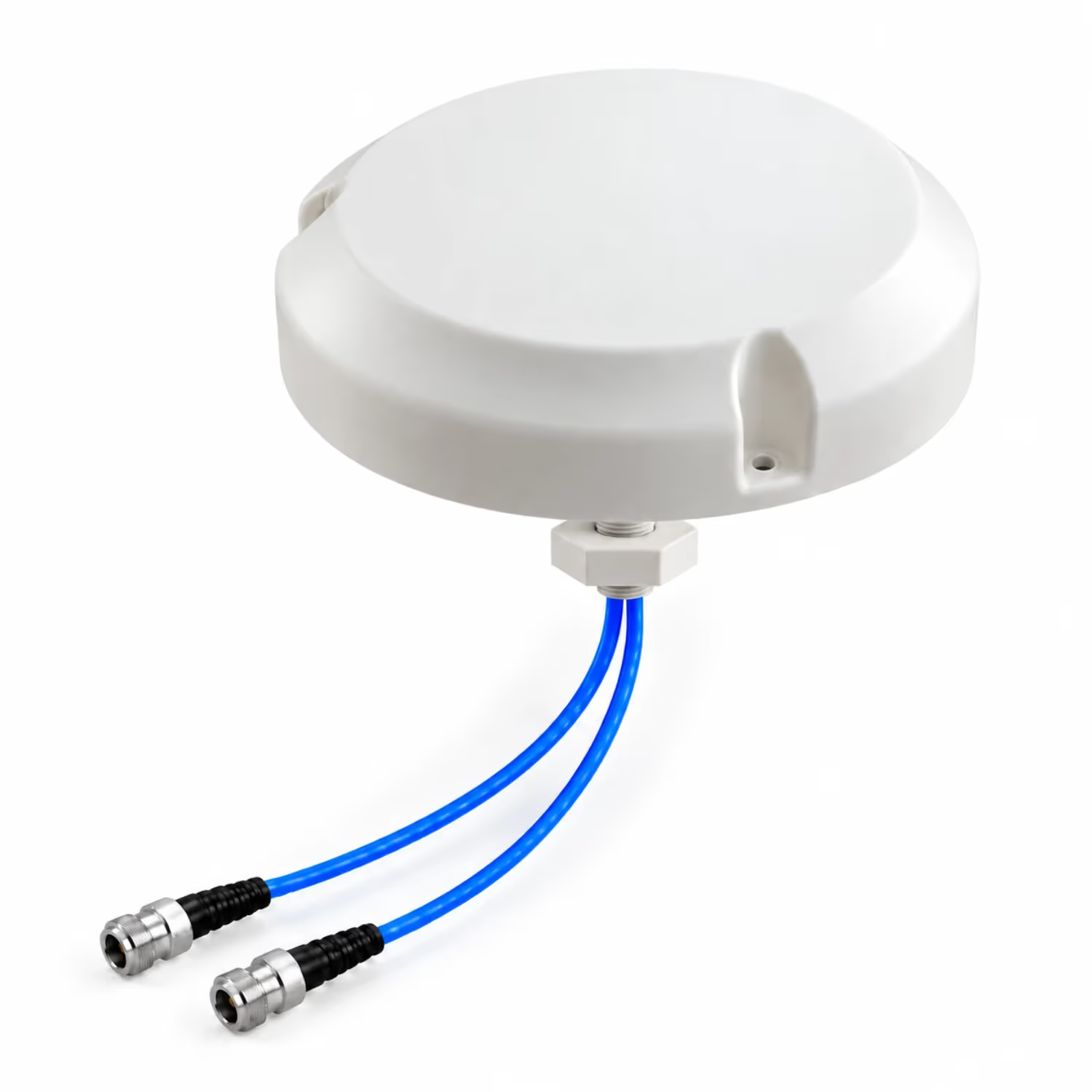
VHF SISO 6 dBi Outdoor Omni Antenna
Model Number: VHF-SISO-OUTDOOR-OMNI-6
This 154–156 MHz VHF outdoor omnidirectional antenna delivers 6 dBi gain, 360° signal coverage, and durable fiberglass construction for reliable two-way radio and base station communications.
Features
- Reliable 154–156 MHz Coverage
- High 6 dBi Gain
- 360° Omnidirectional Signal Coverage
- Low VSWR ≤ 1.5
- Durable Outdoor Fiberglass Construction
- High Wind Resistance
- Wide Operating Temperature Range
- 100W Power Handling
- DC-Grounded Lightning Protection Design
- Standard N Female Connector