Overview
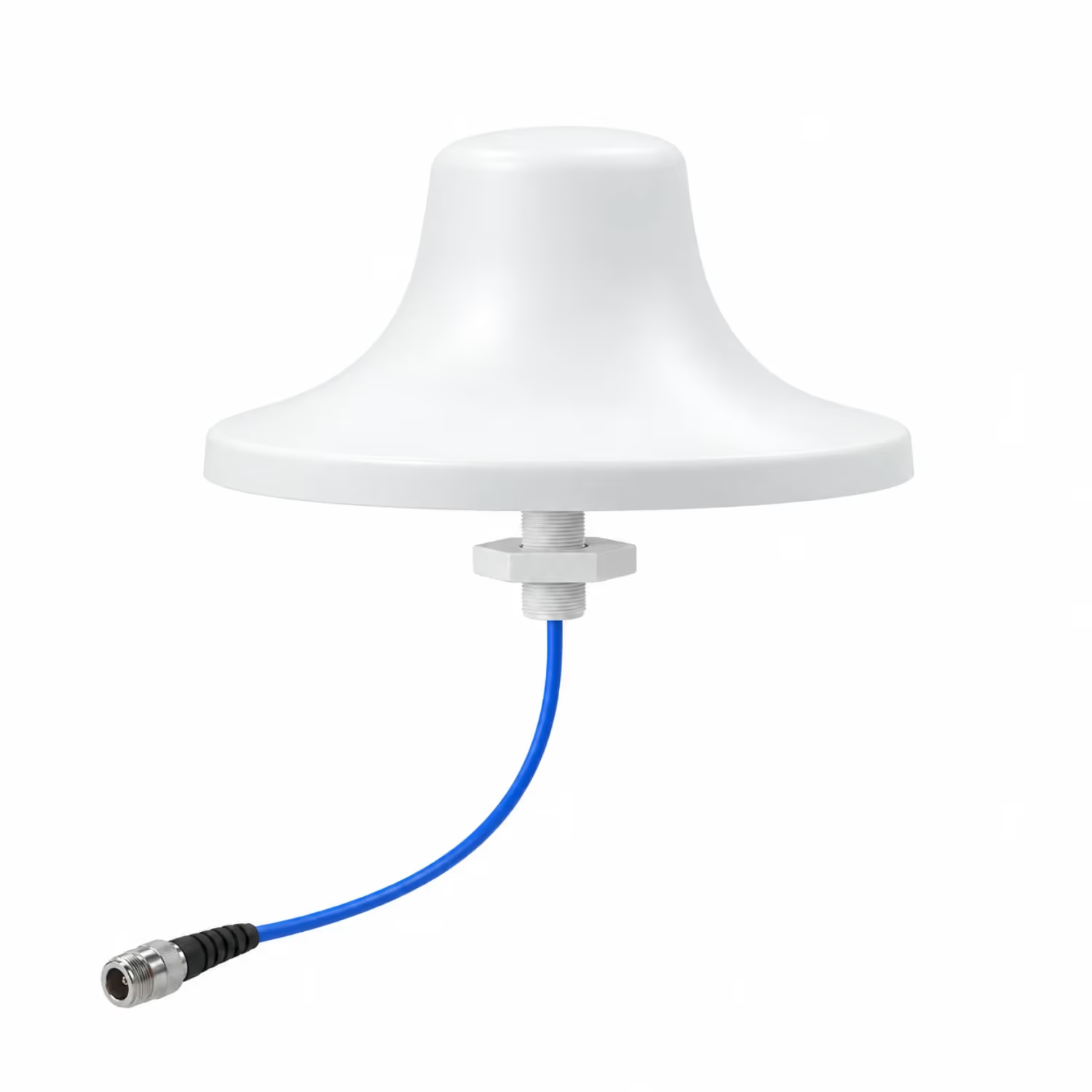
This 617–4000 MHz wideband indoor ceiling antenna provides reliable 4G LTE and 5G coverage for offices, hotels, hospitals, malls, warehouses, and other commercial buildings. Its 360° omnidirectional design, low-PIM performance, and support for DAS, signal booster, CBRS, private LTE, and private 5G networks make it a versatile solution for improving indoor cellular connectivity with one compact ceiling-mounted antenna.
617–4000 MHz 5G Wideband Indoor Ceiling Antenna for DAS, 4G LTE, 5G NR, CBRS and Private NetworksThe 617–4000 MHz 5G Wideband Indoor Ceiling Antenna is an industry-leading solution for modern in-building wireless coverage, designed for customers who need reliable 4G LTE, 5G NR, DAS, IBS, signal booster, repeater, CBRS, private LTE, private 5G and neutral-host network performance from one compact indoor antenna platform.
With exceptionally broad 617–4000 MHz frequency coverage, this best-in-class indoor ceiling antenna supports low-band, mid-band and Sub-6 GHz cellular frequencies through a single antenna. It is designed for professional Distributed Antenna Systems, In-Building Solutions, cellular signal enhancement systems and enterprise wireless infrastructure where network flexibility, low PIM performance and dependable 360-degree indoor signal distribution are critical.
Unlike conventional indoor cellular antennas that are limited to frequency ranges such as 698–2700 MHz, this revolutionary wideband ceiling antenna extends coverage down to 617 MHz and up to 4000 MHz. This allows system integrators to support important low-band cellular spectrum, traditional LTE frequencies, CBRS, C-band and modern 5G Sub-6 GHz networks without deploying multiple narrowband antennas.
For telecom contractors, DAS integrators, mobile network operators, private network providers and commercial property owners, this antenna provides a game-changing way to simplify indoor wireless infrastructure while preparing buildings for both current and future cellular technologies.
One Wideband Antenna for 4G LTE and 5G Indoor CoverageModern buildings rarely rely on a single cellular frequency. Mobile operators may use 600 MHz, 700 MHz, 800 MHz, 900 MHz, 1800 MHz, 2100 MHz, 2300 MHz, 2600 MHz, 3500 MHz and other spectrum depending on the network and country.
Using separate antennas for each frequency range increases installation complexity, inventory requirements and maintenance costs.
The 617–4000 MHz wideband architecture solves this problem by allowing many commonly deployed cellular frequency bands to share one antenna platform.
This makes the antenna particularly valuable for:
4G LTE indoor coverage
5G NR Sub-6 GHz coverage
Distributed Antenna Systems
In-Building Wireless Systems
Cellular signal booster systems
Cellular repeater systems
Neutral-host DAS networks
Multi-carrier cellular systems
Private LTE networks
Private 5G networks
CBRS networks
Enterprise wireless infrastructure
Commercial building cellular enhancement
617–4000 MHz Ultra-Wideband Frequency CoverageOne of the strongest advantages of this product is its exceptionally broad frequency range.
Many traditional indoor ceiling antennas begin at approximately 698 MHz and stop around 2700 MHz. This antenna operates from 617 MHz to 4000 MHz, giving network designers significantly greater flexibility.
The lower 617 MHz frequency limit provides access to important low-band cellular spectrum, while the upper 4000 MHz limit supports modern mid-band 5G, CBRS and C-band applications.
Frequency Range
Typical Applications
617–698 MHz
Low-band LTE and 5G
698–960 MHz
700, 800 and 900 MHz cellular
1427–1518 MHz
Supplemental cellular spectrum
1710–2200 MHz
LTE and 5G cellular networks
2300–2400 MHz
LTE TDD and private networks
2496–2690 MHz
LTE Band 41 and 5G n41
3300–3800 MHz
5G n78 and mid-band networks
3550–3700 MHz
CBRS
3300–4000 MHz
5G C-band and supported n77 spectrum
This wide operating range makes the antenna ideal for telecom professionals who want to reduce the number of different antenna models required across multiple projects.
Extensive 5G NR Band CompatibilityThe antenna supports a wide range of 5G NR FR1 frequencies within its 617–4000 MHz operating range.
Commercially important supported 5G bands include:
n1
n2
n3
n5
n7
n8
n12
n13
n14
n20
n25
n26
n28
n30
n34
n38
n39
n40
n41
n48
n65
n66
n70
n71
n74
n78
The antenna also covers 3300–4000 MHz of the wider n77 frequency range.
This makes the product highly suitable for indoor 5G network deployments requiring both low-band coverage and high-capacity mid-band spectrum.
Comprehensive 4G LTE SupportThe antenna is also designed for extensive LTE compatibility across the 617–4000 MHz range.
Commonly used LTE bands supported within this frequency range include:
B1
B2
B3
B4
B5
B7
B8
B12
B13
B14
B17
B18
B19
B20
B25
B26
B28
B29
B30
B32
B38
B39
B40
B41
B42
B43
B44
B48
B65
B66
B67
B68
B70
B71
B74
B75
B76
B85
This broad LTE compatibility allows the antenna to support existing cellular infrastructure while giving building owners and network operators a clear migration path toward 5G.
Low-Band Coverage Starting at 617 MHzSupport beginning at 617 MHz is a major differentiator compared with many conventional ceiling antennas.
Low-band cellular spectrum is valuable for indoor networks because lower frequencies generally provide stronger building penetration and broader coverage.
By supporting frequencies down to 617 MHz, this antenna can accommodate important low-band cellular services including LTE Band 71 and 5G n71.
This is particularly valuable for indoor coverage projects in North America where 600 MHz cellular services are increasingly important.
5G Mid-Band and C-Band ReadyMany older DAS antennas were designed primarily for legacy 2G, 3G and LTE networks and stop below 2700 MHz.
This antenna extends to 4000 MHz, enabling support for modern 5G mid-band deployments.
This includes:
5G n78 at 3300–3800 MHz
CBRS at 3550–3700 MHz
LTE B42
LTE B43
LTE B48
Private LTE spectrum
Private 5G spectrum
C-band indoor wireless applications
3300–4000 MHz portion of n77
For building owners and integrators planning long-term wireless infrastructure, this frequency range provides substantially more future-ready performance than traditional 698–2700 MHz designs.
Low PIM Performance for Professional DAS SystemsPassive Intermodulation can significantly affect cellular network performance, particularly when multiple carriers and frequency bands are transmitted through the same passive RF infrastructure.
This antenna provides low-PIM performance of up to ≤ -140 dBc @ 2 W, making it suitable for professional multi-band and multi-carrier installations.
Low PIM helps system designers reduce the risk of unwanted intermodulation products that can degrade:
Receiver sensitivity
Uplink performance
Signal quality
Network capacity
Multi-carrier performance
Overall DAS efficiency
For operators and DAS integrators working with demanding commercial installations, low PIM is a critical component of maintaining high-quality RF infrastructure.
360-Degree Omnidirectional Indoor CoverageThe antenna provides a 360-degree horizontal radiation pattern that distributes cellular RF signals around the installation point.
This makes it an excellent choice for centrally located ceiling installations where coverage is required in multiple directions.
Typical installation locations include:
Office floors
Hotel corridors
Conference areas
Retail spaces
Hospital floors
Shopping centers
Warehouses
Airports
Universities
Public buildings
Commercial lobbies
Transportation terminals
The omnidirectional pattern helps create balanced coverage around the antenna and reduces the need for precise directional alignment.
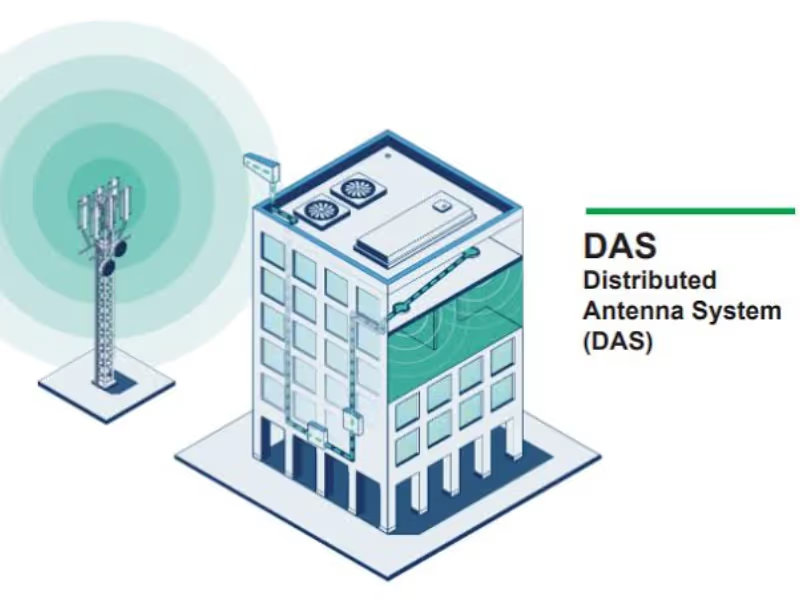
Designed for Distributed Antenna SystemsThis antenna is particularly well suited for Distributed Antenna Systems where cellular signals must be distributed throughout large buildings or multiple floors.
It can be connected through compatible coaxial cable, splitters, couplers, tappers and other passive DAS components to create an engineered in-building RF network.
Typical DAS projects include:
Office towers
Hospitals
Hotels
Shopping malls
Airports
Railway stations
Universities
Convention centers
Warehouses
Industrial facilities
High-rise residential buildings
Underground parking structures
For DAS integrators, the wide frequency coverage can reduce the number of antenna models required for different carrier and frequency configurations.
Ideal for In-Building Wireless SystemsModern commercial buildings frequently experience indoor signal degradation due to reinforced concrete, steel, Low-E glass, elevators and other construction materials.
These materials can significantly attenuate signals from outdoor cellular base stations.
The antenna is designed to serve as an indoor RF distribution point within an In-Building Solution, helping provide reliable cellular coverage throughout the building.
This makes it suitable for new construction projects as well as upgrades to existing buildings with poor cellular reception.
Signal Booster and Cellular Repeater ApplicationsThe antenna can also be used as an indoor service antenna in compatible cellular signal booster and repeater systems.
In a typical repeater system, an outdoor donor antenna receives the cellular signal, the repeater amplifies it and indoor antennas redistribute the amplified signal throughout the building.
The 617–4000 MHz wideband coverage allows one antenna model to support many different cellular booster frequency configurations.
This makes it particularly attractive to professional booster installers and telecom distributors.
CBRS Ready for Enterprise and Private NetworksThe antenna fully covers the 3550–3700 MHz Citizens Broadband Radio Service spectrum used in the United States.
CBRS is increasingly used for private LTE and private 5G networks in:
Manufacturing plants
Warehouses
Logistics centers
Universities
Healthcare facilities
Enterprise campuses
Energy facilities
Smart factories
Transportation infrastructure
Because this antenna covers CBRS along with traditional commercial cellular bands, integrators can use the same antenna platform across public cellular and private network deployments.
Private LTE and Private 5G ApplicationsPrivate cellular networks are increasingly being deployed in industrial and enterprise environments where organizations need greater control, reliability and coverage than conventional Wi-Fi alone can provide.
This antenna is well suited for compatible private LTE and private 5G systems operating within the 617–4000 MHz range.
Potential applications include:
Industrial automation
Warehouse connectivity
Logistics operations
Smart manufacturing
Enterprise communications
Campus networks
Connected equipment
IoT gateways
Operational technology networks
Private enterprise mobility
The wideband design allows customers to select appropriate cellular spectrum without being restricted by a narrow-frequency antenna.
Multi-Carrier and Neutral-Host Network SupportLarge commercial buildings often need to support several mobile operators simultaneously.
A narrowband antenna may be suitable for one carrier or one spectrum range but become unsuitable when additional operators are added.
The 617–4000 MHz design gives neutral-host providers and multi-carrier DAS integrators much greater flexibility.
One common antenna platform can support many cellular frequencies, simplifying infrastructure across multi-operator networks.
This is particularly valuable in:
Airports
Stadiums
Hospitals
Hotels
Shopping malls
Convention centers
Corporate towers
Government buildings
Transportation hubs
Solves Weak Indoor Cellular SignalOne of the main problems this antenna helps solve is poor cellular coverage inside buildings.
Indoor signal loss can cause:
Dropped calls
Failed calls
Slow mobile data
Weak 4G LTE reception
Unstable 5G connections
Poor voice quality
Interrupted video calls
Delayed mobile applications
Cellular dead zones
When properly integrated into a DAS, IBS, repeater or booster system, the antenna helps redistribute cellular RF signals to areas where outdoor macro network coverage is insufficient.
Helps Eliminate Cellular Dead ZonesCellular dead zones are common in large or heavily constructed buildings.
Typical problem areas include:
Basements
Underground parking
Interior offices
Warehouses
Stairwells
Corridors
Conference rooms
High-rise floors
Interior retail spaces
Installing multiple ceiling antennas throughout the building can help create a more controlled and uniform indoor coverage environment.
Reduces the Need for Multiple Narrowband AntennasOne of the most important customer benefits is infrastructure consolidation.
Instead of installing separate antennas for 700 MHz, 800 MHz, 900 MHz, 1800 MHz, 2100 MHz, 2600 MHz and 3500 MHz networks, customers can use one 617–4000 MHz antenna platform for many compatible bands.
This can reduce:
Hardware requirements
Installation time
Ceiling penetrations
Cable complexity
Spare-parts inventory
Procurement complexity
Maintenance requirements
Future replacement costs
Simplifies LTE to 5G Network UpgradesMany commercial buildings were originally equipped with indoor cellular infrastructure designed for LTE frequencies below 2700 MHz.
As operators add 5G mid-band services, legacy antennas may become a limitation.
The extended 4000 MHz upper frequency allows this antenna to support modern 5G and CBRS applications while continuing to support existing LTE services.
This makes it an excellent choice for customers upgrading from LTE-only indoor wireless systems to multi-generation LTE and 5G networks.
Future-Ready Network InfrastructureReplacing ceiling antennas after a building has been completed can be expensive and disruptive.
A wideband antenna allows building owners and network operators to install broader-frequency infrastructure from the beginning.
This can reduce the need for future antenna replacement when:
New cellular bands are activated
Operators deploy additional LTE spectrum
5G networks are expanded
CBRS is introduced
Private cellular networks are added
Multi-carrier services are upgraded
This makes the antenna a smart long-term investment for modern buildings.
Professional 50 Ohm RF ArchitectureThe antenna uses standard 50-ohm impedance, allowing straightforward integration with professional RF and cellular infrastructure.
It can be incorporated into systems using compatible:
50-ohm coaxial cable
RF splitters
Directional couplers
Tappers
Repeaters
Signal boosters
DAS equipment
Small-cell RF systems
Private cellular equipment
This professional RF architecture makes the antenna suitable for engineered commercial telecom deployments.
N-Female Connector for Commercial InstallationsThe N-Female RF connector is widely used throughout professional cellular and DAS infrastructure.
N-type connections provide a robust interface for fixed RF installations and are commonly paired with low-loss coaxial cables used in commercial indoor cellular networks.
For system integrators, this makes the antenna easy to integrate into standard DAS architecture without requiring specialized connector systems.
RG141 Pigtail for Installation FlexibilityThe RG141 pigtail provides a flexible RF connection between the antenna and the building's coaxial distribution system.
This can make installation easier in ceiling spaces where rigid connector positioning may be inconvenient.
The pigtail design also provides additional flexibility when connecting the antenna to feeder cable, jumper cable or other passive DAS components.
Up to 100 W Power HandlingThe antenna supports up to 100 W maximum input power, providing substantial RF power handling capability for professional indoor distribution networks.
This gives system engineers additional design flexibility when working with multi-carrier and higher-power RF systems.
Actual operating power should always be calculated according to system architecture, carrier count, feeder losses and passive component specifications.
Durable UV-Resistant ABS RadomeThe antenna is protected by a durable UV-resistant ABS radome designed for long-term installation.
Although the antenna is primarily intended for indoor use, UV-resistant material provides added durability in areas where the antenna may receive sunlight through:
Windows
Glass atriums
Skylights
Building entrances
Semi-exposed indoor areas
The compact radome also helps protect the internal antenna elements while maintaining a clean commercial appearance.
Discreet Ceiling-Mount DesignCommercial buildings often require wireless infrastructure that delivers strong RF performance without negatively affecting interior appearance.
The ceiling-mount design allows the antenna to blend naturally into modern indoor environments.
This makes it particularly suitable for:
Hotels
Offices
Hospitals
Retail stores
Airports
Corporate buildings
Universities
Conference centers
High-end commercial properties
Compared with large wall-mounted or outdoor-style antennas, the ceiling form factor provides a cleaner and more professional installation.
Ideal ApplicationsThe antenna is designed for a wide variety of professional indoor wireless environments.
Commercial OfficesImprove cellular service in offices, meeting rooms, corridors, reception areas and large corporate buildings.
Hotels and ResortsProvide stronger indoor 4G and 5G coverage across guest rooms, conference areas, lobbies, restaurants and common areas.
Hospitals and Healthcare FacilitiesSupport reliable cellular connectivity throughout medical buildings, administrative areas and healthcare campuses.
Shopping Malls and Retail CentersDeliver better indoor cellular coverage for customers, employees, mobile applications and connected retail systems.
Airports and Transportation FacilitiesSupport high-traffic indoor areas including passenger terminals, waiting areas and transportation infrastructure.
Warehouses and Logistics CentersHelp overcome cellular signal attenuation caused by metal shelving, concrete structures and large indoor floor areas.
Factories and Industrial FacilitiesSupport public cellular, private LTE and private 5G connectivity for industrial operations and smart manufacturing.
Universities and CampusesProvide consistent cellular coverage across classrooms, laboratories, libraries, offices and student facilities.
Parking Garages and Underground AreasExtend cellular coverage into underground and enclosed areas where outdoor signals are weak or unavailable.
High-Rise BuildingsDeploy antennas floor by floor as part of an engineered DAS or repeater network.
Stadiums and Convention CentersSupport large indoor public venues where broad multi-band cellular infrastructure is required.
Target CustomersThis product is designed for professional B2B customers including:
DAS system integrators
In-building wireless contractors
Cellular signal booster installers
RF engineering companies
Telecom infrastructure contractors
Mobile network operators
Neutral-host providers
Private LTE integrators
Private 5G integrators
CBRS solution providers
Telecom distributors
RF wholesalers
Cellular equipment resellers
OEM and ODM telecom brands
Commercial building developers
Property management companies
Facility operators
Industrial wireless solution providers
Low-voltage contractors
MEP contractors
Enterprise network providers
Key Customer Problems SolvedThis wideband indoor ceiling antenna helps customers address a broad range of real-world network challenges.
Customer Problem
How This Antenna Helps
Weak indoor cellular coverage
Distributes compatible cellular signals throughout buildings
Cellular dead zones
Enables additional indoor RF coverage points
Dropped calls
Supports stronger indoor RF distribution
Slow mobile data
Improves access to available LTE and 5G signals
Limited indoor 5G
Extends coverage up to 4000 MHz
No 600 MHz support
Frequency coverage begins at 617 MHz
Legacy DAS bandwidth limitations
Supports both LTE and modern 5G frequencies
Multiple antenna models required
One wideband antenna covers many bands
Multi-carrier complexity
Supports broad multi-band DAS architectures
CBRS network requirements
Covers 3550–3700 MHz
Private LTE requirements
Supports compatible private cellular spectrum
Private 5G requirements
Supports compatible Sub-6 GHz frequencies
Excessive installation complexity
Consolidates multiple bands into one antenna platform
Future upgrade costs
Wideband design supports evolving networks
High SKU inventory
One broadband model can serve multiple project types
PIM concerns
Low-PIM construction supports professional DAS applications
Why This Antenna Is DifferentThe strongest competitive advantage of this product is the combination of ultra-wideband cellular coverage and commercial-grade RF performance in one indoor ceiling antenna.
Wider Frequency Coverage Than Traditional DAS AntennasMany conventional models cover approximately 698–2700 MHz.
This antenna covers 617–4000 MHz.
That means it adds important frequency capability at both ends of the spectrum.
At the low end, it supports newer 600 MHz cellular services.
At the high end, it supports CBRS, 5G mid-band, n78 and other frequencies approaching 4 GHz.
Built for Modern LTE and 5G NetworksThis antenna is not limited to legacy LTE coverage.
It is designed for modern multi-generation wireless infrastructure where existing LTE networks must coexist with 5G NR and private network technologies.
Supports Both Coverage and Capacity SpectrumLow-band cellular spectrum is useful for broad coverage and building penetration.
Mid-band spectrum is increasingly used for higher-capacity 5G services.
Because this antenna supports both, network designers can build more flexible systems using one antenna architecture.
Professional Low-PIM PerformanceLow-PIM capability makes this product a better fit for commercial DAS and multi-carrier networks than generic consumer indoor antennas.
CBRS and Private Network ReadyFull 3550–3700 MHz CBRS coverage expands the product beyond traditional carrier DAS applications into enterprise private wireless networks.
Reduces Infrastructure ComplexityOne wideband ceiling antenna can replace several narrowband models in many network designs.
This provides meaningful benefits for installers, distributors and building owners.
Easier Standardization Across ProjectsSystem integrators can standardize on one antenna model for multiple customer projects, which can simplify:
Procurement
Inventory
Installation training
Spare parts
Project design
Product selection
Maintenance
Technical SpecificationsSpecification
Value
Product Type
Indoor Wideband Ceiling Antenna
Frequency Range
617–4000 MHz
Gain
2–5 dBi
Polarization
Vertical
Horizontal Beamwidth
360°
VSWR
≤ 1.8
PIM
≤ -140 dBc @ 2 W
Maximum Input Power
100 W
Impedance
50 Ω
Connector
N-Female
Pigtail Cable
RG141
Radome Material
UV-Resistant ABS
Installation
Indoor Ceiling Mount
Network Support
4G LTE, 5G NR, DAS, IBS, CBRS, Private LTE, Private 5G
Radiation Type
Omnidirectional
Key Features and BenefitsUltra-wide 617–4000 MHz coverage
Supports 4G LTE and 5G NR
Full 3550–3700 MHz CBRS coverage
Supports 5G n78
Supports low-band n71 and B71
Low-PIM performance
360-degree omnidirectional coverage
Up to 100 W power handling
Professional N-Female connector
Standard 50-ohm impedance
Flexible RG141 pigtail
Durable ABS radome
Ceiling-mount installation
Multi-carrier compatibility
Neutral-host DAS ready
Private LTE ready
Private 5G ready
LTE to 5G upgrade friendly
Reduced antenna SKU requirements
Future-ready broadband infrastructure
A Best-in-Class Choice for Modern Indoor Cellular InfrastructureThe 617–4000 MHz 5G Wideband Indoor Ceiling Antenna represents a major step forward from conventional narrowband and legacy DAS antennas.
Its combination of wideband cellular coverage, 5G Sub-6 GHz capability, low-band support, CBRS compatibility, low-PIM performance, 360-degree omnidirectional radiation, professional N-Female connectivity and high RF power handling creates a versatile antenna platform for today's most demanding indoor wireless environments.
For DAS integrators, telecom contractors and private network providers, this antenna can simplify network design while reducing the number of different antenna models required.
For building owners and facility operators, it provides a future-ready infrastructure platform capable of supporting current LTE networks while preparing indoor systems for continued 5G expansion.
For distributors and OEM brands, it offers a highly versatile product that addresses a broad range of indoor cellular applications using one standardized antenna platform.
Whether the objective is eliminating cellular dead zones in an office tower, deploying a neutral-host DAS in an airport, upgrading a hotel from LTE to 5G, installing a CBRS private network in a warehouse or building a multi-carrier indoor cellular system, this industry-leading 617–4000 MHz ceiling antenna delivers the wideband flexibility, professional RF performance and long-term network compatibility required for modern in-building wireless infrastructure.
Related Products
No related products found.
Related Products (Category & Subcategory)

Related Tags
 5G NR→
4G LTE→
 DAS→
Indoor DAS→
IBS→
In-Building Coverage→
Cellular Coverage→
n1→
n28→
n71→
n77→
n78→
LTE→
GSM→
CDMA→
Private 5G→
Enterprise Wireless→
Signal Booster→
Telecom→
Telecom Infrastructure→
Click on a tag to see related products
Related Products (Tags)

5G Omni SISO 7 dBi Antenna
5G5G NRCPE

5G Omni SISO 4 dBi Antenna
4G LTE5G5G CPE
5G Omni SISO 3 dBi Antenna
4G LTE5G5G NR

5G MIMO High Gain Panel Antenna
2 portD2DFWA
5G MIMO 9 dBi Panel Antenna
2 port5G5G CPE

5G SISO High Gain 14dBi Panel Antenna
4G LTE5G5G NR
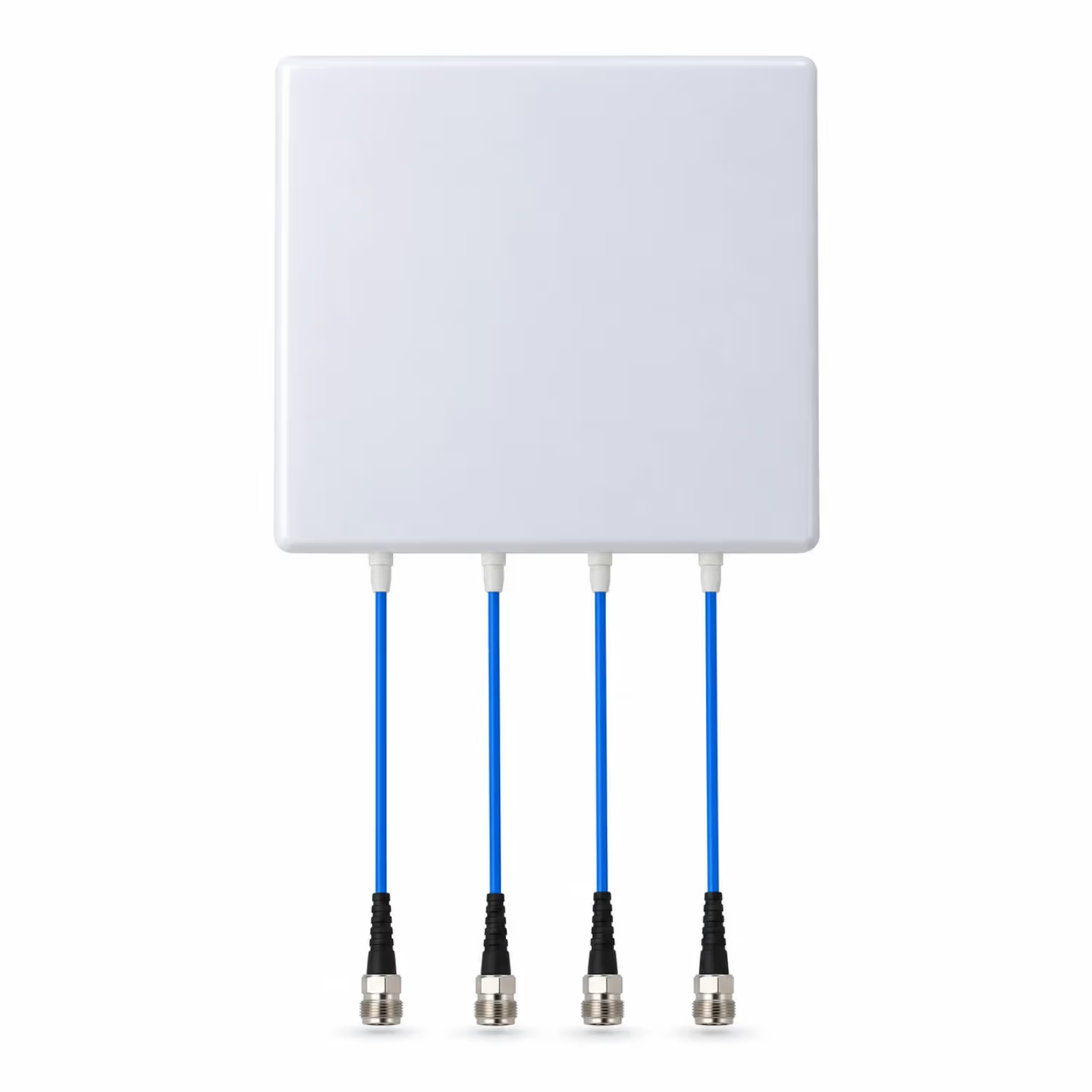
5G MIMO 4x4 9 dBi Panel Antenna
4 Port5G5G NR

5G LPDA 11 dBi Antenna
11dBi4G LTE5G
Reviews
Loading…
5G Wideband Indoor Ceiling Antenna
Model Number: 5G-Wideband-Indoor-Ceiling-Antenna
A wideband indoor ceiling antenna that improves 4G LTE and 5G coverage across 617–4000 MHz for DAS, signal booster, CBRS, and private network applications.
Features
- 617–4000 MHz Wideband Coverage
- 4G and 5G Ready
- Low-PIM Signal Performance
- 360° Indoor Signal Coverage
- Supports CBRS Networks
- Private LTE/5G Compatible
- Multi-Carrier DAS Ready
- Up to 100W Power
- Easy Ceiling Installation
- Future-Ready Network Upgrade